Stress and Your Spine: A Chiropractor's Perspective and 5 Practical Tips


We tend to think of stress as something that lives in our minds. But anyone who's carried a stressful week in their shoulders knows it's physical too. As chiropractors, we see the physical side of stress constantly, and there's a real connection between the amount of stress you're under and how your spine and nervous system feel. Here's our perspective, plus a few practical things you can do.
The key idea: stress isn't just emotional. It triggers a physical response in your body that directly affects your muscles, your spine, and your nervous system. Understanding that connection is the first step to managing it better.
How Stress Shows Up in Your Body
When you're stressed, your body activates its "fight or flight" response. Your muscles tense, your heart rate climbs, and your nervous system shifts into a heightened, reactive state. This is useful in a genuine emergency. The problem is that modern life keeps many of us in that state far too often, and for far too long.
When that stress response rarely switches off, the effects accumulate. Muscles stay tight, especially in the neck, shoulders, and upper back. Posture suffers. The nervous system stays wound up and struggles to return to a calm, regulated state. Over time, this shows up as tension, headaches, poor sleep, fatigue, and that constant feeling of being unable to fully relax.
The Spine and Nervous System Connection
Here's where it ties back to what we do at Roots Chiropractic. Your spine houses much of your nervous system, and the two are deeply linked. Chronic stress keeps your nervous system in that elevated state, which keeps the muscles around your spine guarded and tight. That tension can then restrict how well your spine moves, which feeds back into keeping the nervous system on edge. It becomes a loop.
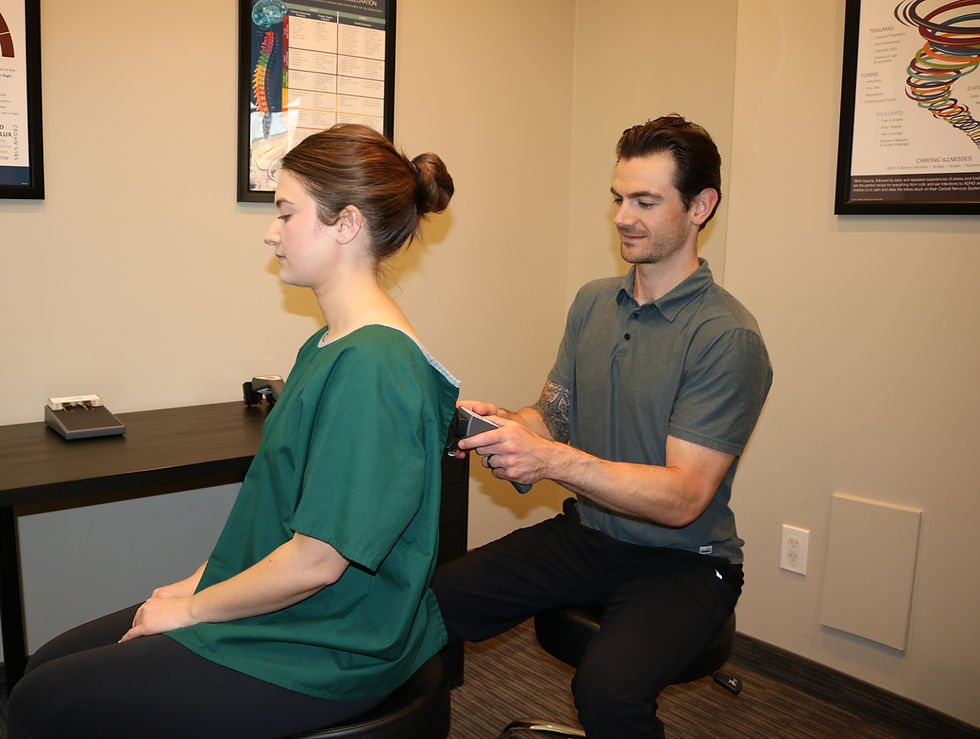
Chiropractic care can help interrupt that loop. By restoring proper movement to the spine and supporting better nervous system regulation, chiropractic care helps your body shift out of constant stress mode and back toward balance. At Roots Chiropractic, we use INSiGHT nervous system scans to actually see where that stress and tension are concentrated, so we can address it specifically.
5 Practical Ways to Manage Stress
Alongside care, here are five simple things that genuinely help.
1. Breathe with intention. A few minutes of slow, deep breathing signals your nervous system to shift out of fight-or-flight. Try breathing in for four counts and out for six. The longer exhale is what calms you down.
2. Move your body daily. Movement is one of the most effective ways to discharge stress. It doesn't have to be intense. A walk, some stretching, or anything that gets you moving helps release built-up tension.
3. Protect your sleep. Stress and poor sleep feed each other. Keep a consistent bedtime, limit screens before bed, and give your nervous system the chance to recover overnight.
4. Take real breaks from screens. Constant input keeps your nervous system switched on. Step away, look at something other than a screen, and let your system reset a few times a day.
5. Pay attention to where you hold tension. Notice when your shoulders are creeping toward your ears or your jaw is clenched. Simply becoming aware lets you consciously
release it before it builds.
Stress Is Inevitable, But It Doesn't Have to Run You
You can't eliminate stress entirely, but you can change how your body carries and recovers from it. If you're around East Mesa, Gilbert, or Queen Creek and stress has settled into your body, we'd be glad to help you find some relief.
Learn more about our adult chiropractic care, or become a new patient to get started.